Most people know a well-designed home when they walk into one. The rooms feel right. The light is good. Moving from space to space feels natural. But ask someone to explain why, and they’ll usually struggle to put it into words.
That’s residential architecture at work. And understanding it, even at a basic level, can completely change how you approach building or renovating a home.
This guide covers what is residential architecture, how it works, what architects actually do, and why it matters for anyone building or planning a home.
What Is Residential Architecture?
The simplest answer: residential architecture is the design and planning of homes and living spaces. It covers everything from a single-family house on a quarter-acre lot to a large estate, a townhouse, a multi-family building, or a vacation property.
But the definition of residential architecture goes deeper than just drawing floor plans. It’s the discipline of creating spaces where people live, rest, raise families, and build their lives. That means balancing practical function, structural integrity, aesthetic quality, and the specific needs of the people who will actually occupy the space.
Residential architecture meaning extends to how a home fits its site, how it responds to climate, how it connects indoor spaces to outdoor ones, and how it holds up and feels right over decades of use. It’s not just about what a home looks like on the outside. It’s about how it works from the inside out.
When done well, what is residential architecture becomes something most homeowners never have to think about, because everything just works.
How Residential Architecture Differs From Commercial Architecture
It’s a common question: isn’t architecture just architecture?
Not quite. Commercial architecture deals with buildings designed for business, retail, office work, hospitality, or public use. The goals are different. Commercial buildings typically prioritize high foot traffic, code compliance for public occupancy, durability under heavy use, and often a corporate or brand identity.
What is residential architecture in contrast? It’s personal. The design serves the specific people who will live there. It has to accommodate daily routines, storage needs, privacy requirements, family dynamics, and long-term comfort. The human scale is more intimate, and the decisions are more individual.
A commercial architect designs for many unknown users. A residential architect designs for you.
Residential Architecture Design: What It Actually Involves
Residential architecture design covers a wide range of work. It starts before a single line is drawn and continues through the final stages of construction.
Here’s what that process looks like in practice.
Site Analysis
Before any design work begins, a good architect studies the site. Where does the sun rise and set? Which direction does the prevailing wind come from? Are there views worth capturing or neighbors to screen out? What are the soil conditions? How does water drain across the lot?
Residential space planning starts with the land. A home that ignores its site will always fight against its surroundings. One that responds to the site will feel like it belongs there.
Program Development
This is the stage where the architect and homeowner work through what the home needs to include. How many bedrooms? What’s the flow between kitchen, dining, and living areas? Is there a home office? A gym? A guest suite? How formal or informal should the main living spaces feel?
Architectural design for homes at this stage is less about aesthetics and more about understanding how the family actually lives. The program is essentially a detailed list of spaces, relationships between spaces, and priorities.
Schematic Design
Here’s where ideas start taking shape. The architect develops early concepts showing how the home could be organized on the site, how the major spaces relate to each other, and what the overall character of the home might be.
This is when home architectural design starts to become something you can see and respond to. Good architects present options at this stage rather than a single solution.
Design Development
Once a direction is agreed on, the design gets more specific. Materials get selected. Window sizes get determined. The structural system gets worked out. Details like staircases, built-ins, and exterior features get resolved.
Residential architecture design at this stage is where most of the important decisions get made. Changes here are relatively easy. Changes during construction are expensive.
Construction Documents
These are the detailed drawings and specifications that builders use to construct the home. They cover everything: dimensions, materials, structural requirements, mechanical and electrical systems, finishes, and more. This is a significant body of work, and its quality directly affects how smoothly construction goes.
Construction Administration
Many architects stay involved during the build to review work, answer questions, and make sure the home is being built as designed. This is one of the most valuable services an architect provides, and one that homeowners sometimes skip to save money, often to their regret.
What Does a Residential Architect Do?
What does a residential architect do is one of the most searched questions among people planning a new home. The short answer is that they translate your needs and vision into a buildable, beautiful home. The longer answer is more interesting.
They Listen First
A skilled residential architect spends a lot of time understanding who you are and how you live before touching a pencil or a screen. They ask about your daily routines, your family structure, how you entertain, what you love about your current home, and what drives you crazy about it.
What architects do for homeowners at the most fundamental level is listen carefully and translate what they hear into design decisions.
They Manage Complexity
Building a home involves dozens of consultants, contractors, code requirements, material lead times, structural considerations, and budget pressures, all happening at once. The role of a residential architect is to hold all of that together and make sure every piece serves the overall design intent.
They Solve Problems You Don’t Know You Have
Residential architectural principles are the tools architects use to anticipate problems before they become expensive mistakes. How will this room feel in winter when the sun is low? Is this hallway wide enough to move furniture through? Will this kitchen layout actually work for the way this family cooks?
Tasks performed by residential architects include identifying these issues early and solving them on paper rather than during construction.
They Create Value
A well-designed home commands a higher price in any market. Good residential architecture design makes a home more functional, more beautiful, and more durable, all of which translate directly into resale value.
They Coordinate the Full Team
On a custom home project, the architect typically coordinates structural engineers, mechanical engineers, landscape architects, interior designers, and specialty consultants. The residential architect job description includes being the primary point of communication between all these parties and the homeowner.
What Is Residential Design?
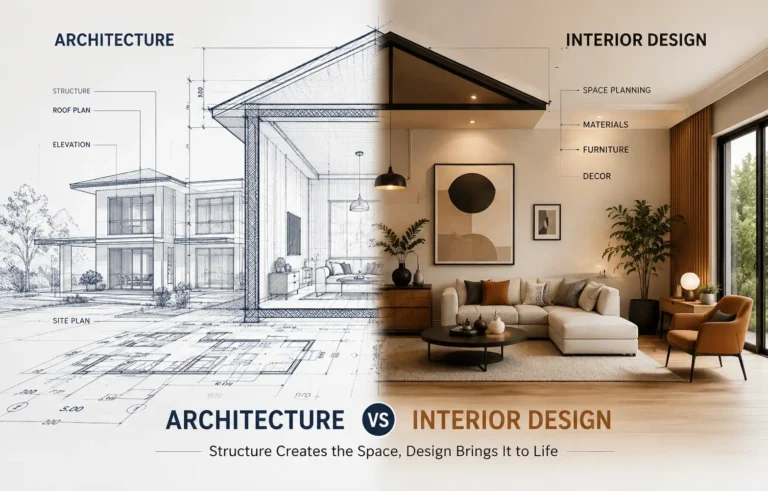
What is residential design is a question that often gets confused with interior design. They’re related but distinct.
Residential design meaning refers to the planning and organization of living spaces at both the architectural and interior level. It covers how a home is laid out, how spaces relate to each other, what materials are used, and how the home looks and feels.
Home design explained in practical terms: residential design is the full picture of how a home comes together, from the overall footprint on the lot to the hardware on the kitchen cabinets.
Interior design, by contrast, focuses on what happens inside a completed architectural shell. Interior designers select furniture, finishes, lighting fixtures, window treatments, and decorative elements. They work within the spaces that the architect has created.
The distinction matters when you’re assembling your project team. Both disciplines are valuable. But they’re not interchangeable.
Residential Design Principles: What Makes a Home Work
Residential design principles are the underlying logic that separates a well-designed home from one that just has a nice exterior.
Function First
Fundamentals of residential design start with function. A home has to work for the people in it. Storage has to be in the right places. Traffic patterns have to flow logically. Rooms have to be the right size for what happens in them. No amount of beautiful finish work compensates for a floor plan that fights the way you live.
Natural Light
How light moves through a home over the course of a day has an enormous impact on how it feels. Residential design principles consistently prioritize natural light as one of the most important factors in livability. South-facing windows capture winter sun. Strategic overhangs block summer heat. Well-placed skylights bring light into spaces that would otherwise feel dark.
Proportion and Scale
Rooms that feel right are rooms where the proportions work. Ceiling heights relate to floor area. Window sizes relate to wall sizes. Doorway widths relate to the spaces they connect. Home architecture explained in terms of proportion and scale is really about creating spaces that feel comfortable to the human body.
Connection Between Inside and Outside
The best residential design doesn’t treat a home as separate from its site. Terraces, covered porches, large windows, and careful orientation all create a sense that the home and its landscape are part of the same experience.
Privacy and Openness
Residential design concepts always address the balance between private and shared spaces. Bedrooms need separation from living areas. Home offices need quiet. Common areas need to invite gathering. Getting this balance right makes a home feel both comfortable and alive.
The Scope of Residential Architecture
The scope of residential architecture is broader than most people realize. It includes:
- Single-family homes, from modest to large
- Custom estate homes and luxury builds
- Townhouses and row houses
- Duplexes and small multi-family buildings
- Accessory dwelling units (ADUs) and guest houses
- Major renovations and additions
- Vacation homes and second residences
- Historic preservation and adaptive reuse of residential buildings
Each of these project types has its own set of challenges and considerations. A residential architect who works across this range develops a depth of problem-solving experience that directly benefits every client they work with.
For Residential Architecture Design: Why Working With an Architect Matters
For residential architecture design at any level, working with a licensed architect produces better results than working without one. Here’s why.
Better decisions earlier. Architects catch problems at the design stage, where changes cost money on paper rather than money in the field.
Better builder relationships. Complete, clear construction documents reduce misunderstandings between builders and owners. They also make bidding more accurate.
Better long-term value. Homes designed by architects sell for more, feel better to live in, and perform better over time.
Better code compliance. Local building codes are detailed and constantly updated. Architects know them and design to meet them from the start.
If you’re planning a custom home, connecting with experienced Residential Architecture Services early in the process is one of the best investments you can make.
Can Residential Architecture Improve Energy Efficiency?
Yes, significantly. Residential architectural principles and energy efficiency are closely connected, and good design makes a home dramatically more efficient without sacrificing comfort or aesthetics.
Orientation is the first tool. A home positioned to take advantage of passive solar gain reduces heating costs in winter. Proper shading from overhangs, trees, or screens reduces cooling loads in summer.
Insulation and air sealing are baked into the design at the construction document stage. A well-detailed envelope keeps conditioned air in and outdoor conditions out.
Window placement and glazing type affect both energy performance and daylighting. Choosing the right windows for each orientation is an architectural decision, not just a product selection.
Mechanical system efficiency gets a significant boost when the home is designed to need less heating and cooling in the first place. A well-designed home works with the climate rather than against it.
How Residential Architects Work With Homeowners
The relationship between a homeowner and their architect is one of the most important professional relationships in the building process. Here’s how it typically works.
Initial consultation: The architect learns about your project, your site, your budget, and your goals. You learn about their process, their experience, and whether they’re a good fit.
Proposal and contract: The architect proposes a scope of services and fee. Once agreed, a contract formalizes the relationship and sets clear expectations on both sides.
Discovery and programming: Detailed conversations about how you live, what you need, and what you want the home to feel like. Site visits and analysis happen at this stage.
Design phases: Schematic design, design development, and construction documents proceed in sequence with regular check-ins and approvals at each stage.
Construction support: The architect stays involved during the build to answer questions, review work, and protect the design intent.
Responsibilities of a home architect throughout this process include clear communication, honest advice, and consistent advocacy for your interests.
Residential Design Styles: A Quick Overview
Residential design styles give homeowners a vocabulary for expressing what they want. While style is just one dimension of good design, it’s an important one.
Traditional: Rooted in historical precedent, traditional residential design favors craftsmanship, ornamental detail, and familiar forms. Think Colonial, Georgian, Craftsman, and Tudor.
Modern and Contemporary: Clean lines, open plans, minimal ornamentation, and large expanses of glass define these styles. They feel open and light-filled.
Transitional: A blend of traditional and contemporary elements. Transitional design is one of the most popular choices today because it offers warmth and familiarity without feeling dated.
Mediterranean and Spanish Colonial: Red tile roofs, stucco walls, arched openings, and courtyard spaces. Particularly well-suited to warm, sunny climates.
Mountain and Rustic: Natural stone, heavy timber, and deep overhangs connect these homes to their landscapes. Common in mountain and rural settings.
Farmhouse: A relaxed, practical aesthetic that draws from agricultural building traditions. Large porches, board-and-batten siding, and simple, honest materials.
What to Look for in a Residential Architect
Choosing the right architect makes a significant difference in how your project goes and how your home turns out. Here’s what to look for.
Relevant experience: Has this architect designed homes similar to what you want? A firm with deep experience in the style and scale of your project will produce better results than one learning on your dime.
Communication style: You’ll be working closely with this person for a year or more. Make sure they listen well, explain things clearly, and respond promptly.
Design process: Every architect has a process. Make sure you understand how decisions get made, how often you’ll meet, and how changes are handled.
Construction knowledge: Beautiful drawings that can’t be built are worse than useful drawings. The best residential architects understand construction deeply and design accordingly.
References: Talk to past clients. Ask about communication, budget management, how problems were handled, and whether they’d hire this architect again.
If you want to work with a team that brings all of this together for luxury residential projects, Custom luxury home builders with integrated design and construction capabilities are worth exploring.
Frequently Asked Questions
What is residential architecture and how is it defined?
What is residential architecture in simple terms? It’s the design, planning, and technical development of homes and living spaces. The definition of residential architecture covers everything from initial site analysis and space planning through construction documents and on-site oversight. It balances function, structure, aesthetics, and the specific needs of the people who will live in the home.
How does residential architecture differ from commercial architecture?
Commercial architecture designs spaces for business, public, or institutional use, serving large numbers of unknown users. Residential architecture design is personal and specific, created for the individuals and families who will actually live there. The scale, goals, and design priorities are fundamentally different.
What are the main goals of residential architectural design?
The main goals of residential architecture design are to create homes that function well for their occupants, respond appropriately to their sites, use materials and systems that perform reliably over time, and create spaces that feel genuinely good to live in. Aesthetics matter, but they support these deeper goals rather than replace them.
What does a residential architect do during a home project?
What does a residential architect do spans the entire project. They analyze the site, develop the program with the homeowner, design the home through multiple stages, produce construction documents, coordinate consultants, and oversee construction. The role of a residential architect is to manage the full complexity of a home project while keeping the design intent intact from start to finish.
Why is residential architecture important for home design?
What is residential architecture’s contribution to home design? It brings systematic thinking, technical knowledge, and design skill to what is otherwise an overwhelming process. Homes designed by architects function better, look better, and perform better over time. They also tend to hold their value more reliably in the real estate market.
What skills should a good residential architect have?
A good residential architect combines design creativity with technical knowledge, strong listening skills, clear communication, project management ability, and deep understanding of construction. The responsibilities of a home architect require both left-brain and right-brain thinking in equal measure.
How does residential design contribute to functionality and aesthetics?
What is residential design if not the reconciliation of function and beauty? Good residential design principles treat these two goals as inseparable. A well-designed home functions smoothly because the layout, proportions, and spatial relationships were carefully thought through. And it looks beautiful because those functional decisions were made with aesthetic awareness.
Can residential architecture improve energy efficiency?
Yes. Residential architectural principles like passive solar orientation, proper shading, envelope performance, and strategic window placement can dramatically reduce a home’s energy consumption. The best energy efficiency gains come from design decisions made early, not from systems added after the fact.
How do residential architects work with homeowners?
How architects work with homeowners follows a sequence: initial consultation, program development, design phases with regular check-ins, construction documents, and construction support. The relationship works best when the homeowner is engaged and communicative, and when the architect listens carefully and explains decisions clearly throughout the process.
What is the difference between residential design and interior design?
What is residential design versus interior design? Residential design, as a discipline, addresses the full scope of how a home is conceived, planned, and built. Interior design focuses specifically on the interior environment, including furniture, finishes, lighting, and decorative elements, within spaces that the architect has already created. Both are valuable. They’re not the same.
Final Thoughts
What is residential architecture at its core? It’s the thoughtful, skilled practice of designing places where people live well. It draws on history, science, art, and deep listening to create homes that work, look right, and feel genuinely good to be in.
Whether you’re planning a custom home from scratch, adding on to an existing property, or simply trying to understand what goes into a well-designed house, residential architecture design is the framework that makes it all possible.
The decisions you make at the design stage will shape how you live for decades. Working with skilled professionals who understand what does a residential architect do at every stage of the process is one of the best investments a homeowner can make.
What is residential design, ultimately? It’s the difference between a house and a home.