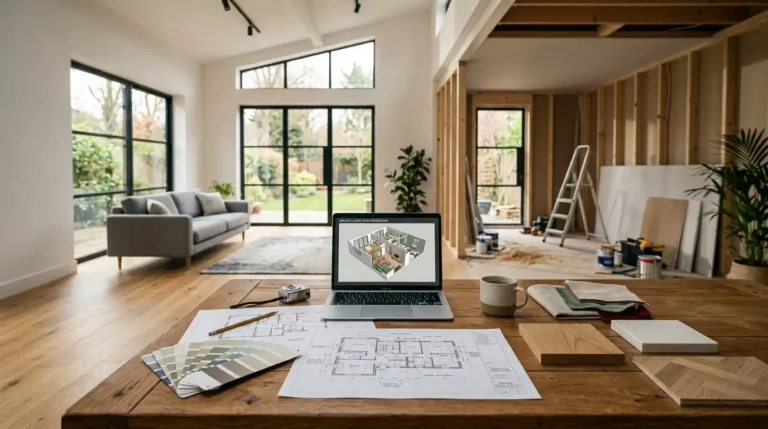

Contemporary interior design is whatever feels current right now. Clean lines. Neutral colors. Natural materials. Open rooms. It’s not locked to one era like modern design is. It keeps changing.
People say “contemporary” when they mean “modern”, but it really isn’t the same thing. If you mix them up and try to land on that contemporary interior design style without actually knowing the difference, your room can start feeling a bit off, you know, and you won’t pin down why.
What Is Contemporary Interior Design, Actually?
Contemporary just means current, more or less. Whatever’s trending right now, that’s contemporary. Like, a room that felt kind of fresh in 2005 doesn’t feel fresh today. Nothing really changed in the room itself. That’s kind of the meaning of contemporary interior design: a snapshot of right now, not some locked-in style you can pin down once and keep forever.
The name showed up in the 1970s. Designers started blending modernism with postmodern and Art Deco ideas. The blend stuck and got its own name. It keeps pulling from minimalism, Scandinavian style, industrial looks, whatever’s in the air culturally. If you’re asking what is contemporary interior design style at its core, that’s the answer: it’s a moving target, by design.
Characteristics of Contemporary Interior Design
These are the core elements of contemporary interior design that show up again and again, even as the look itself shifts:
- Clean lines on furniture and walls, sometimes sharp, sometimes curved
- A neutral base: white, warm gray, beige, off-white
- Natural materials like wood, stone, linen, leather, concrete, glass
- Open layouts where rooms run into each other
- One bold piece per room, big art, a sculptural light, a colored sofa
- Lighting that actually works, big windows, track lights, statement pendants
- Not much clutter
People call contemporary rooms cold a lot. Usually that’s a texture problem, not a color one. Put smooth concrete next to raw wood next to soft linen and the room warms up, even with a quiet palette.
What Colors Are Used in Contemporary Interior Design?
The base palette stays neutral. Soft white, warm gray, greige, charcoal. These cover the walls and the big furniture. Color shows up in small doses. A navy wall. A mustard chair. One painting with a bit of terracotta in it.
Earthy colors are showing up more in contemporary home interior design trends lately. Sage, sand, clay, olive. They feel neutral enough to fit but add more warmth than plain gray. Stick to one bold color per room. That’s the standard move in contemporary interior decorating, and it’s one of the easiest parts of the contemporary design style to get right on a budget.
How Is Contemporary Design Different from Modern Design?
| Feature | Contemporary Interior Design | Modern Interior Design |
|---|---|---|
| Time period | Always current, constantly evolving | Specific era, 1920s to 1970s |
| Lines | Mix of straight and curved | Strictly straight, geometric |
| Color | Neutral with occasional bold accents | Warm neutrals, earth tones |
| Materials | Wide range, natural and industrial | Wood, leather, wool, natural only |
| Feel | Sleek, fresh, slightly cool | Warm, earthy, grounded |
| Patterns | Minimal to none | Geometric when used |
| Flexibility | High, absorbs new trends | Low, defined by era |
| Avg. room cost | $4,000 to $15,000 | $3,500 to $12,000 |
Modern design feels kind of stuck in one era. Mid-century furniture, Bauhaus, Scandinavian simplicity. You know, that general vibe. But contemporary interiors aren’t really tied to all that; it’s more like “right now” good design, and that’s it. A lot of people mash the two together as “modern contemporary interior design”, but honestly, they’re separate styles that just overlap in clean lines and simple shapes. Also, knowing the contemporary interior design vs modern difference matters, like when you’re shopping for furniture, and you want the room to hang together properly.
Where the walls sit, how big the windows are, the ceiling height. All of it shapes what contemporary style can pull off. Building new? Talk to a Park City custom home builder before the floor plan is locked in. Saves you from undoing work later.
What Materials Are Common in Contemporary Interior Design?
Materials in contemporary style interior design mix natural and industrial. That mix is part of why the rooms feel interesting. Wood shows up a lot, warmer tones, visible grain. Stone and concrete add weight. Glass keeps things open. Steel and chrome bring an edge. Linen and leather sit at opposite ends of soft and handle most upholstery.
Contemporary Living Room Design Ideas
If you’re hunting for contemporary interior design ideas for your living room, begin with one statement piece. Like, big art or a sculptural light. Even a sofa in a material you really wouldn’t predict. Then let the rest kind of stay quiet, around it. Keep the furniture low, too. A low-profile sofa in neutral linen might run $1,500 to $4,500, depending on size and brand. Pair it with a simple wood or stone coffee table. Nothing too heavy in the legs, no carving at all. Rugs should be calm as well, not pushing back. Go for a larger jute or wool rug, at least 8×10, and it kind of anchors the space without stealing the show.
And if you want more lift, floor-to-ceiling curtains in off-white linen are usually $200 to $600 a panel. They add height without making the room feel closed in.
Planning a bigger overhaul? It helps to know what is home interior design actually covers first.
Contemporary Interior Design for Small Spaces
Clean lines and low clutter keep small rooms from feeling chaotic. Keep the palette tight. One or two neutrals across walls and floors make the room look bigger. Add texture through a rug or a leather chair instead of more stuff.
Go vertical. Floor-to-ceiling shelves or tall curtains pull the eye up. Multi-functional furniture, a storage ottoman, a sofa bed, keeps the room useful without adding bulk. One big mirror does more than five small ones. It bounces light and opens the room up.
How to Create a Contemporary Interior Design
Start with the floor plan. This style needs open space. Pulling down a non-structural wall can change a room completely on its own.
Next, hit the big surfaces. Warm white or greige paint. Light wood or polished concrete floors. Then add one statement piece, and go bigger than feels comfortable. A too-small rug or too-small art is one of the most common mistakes people make here. Last step: layer in texture. A chunky throw. A stone lamp base. A rough linen cushion next to a smooth leather one. People skip this step constantly, and it’s exactly why some contemporary rooms feel sterile instead of put-together.
Working with interior designers in Park City from day one means these calls get made on purpose, not by accident.
Is Contemporary Interior Design Minimalist?
Kind of, but not really. Contemporary interior design examples have fewer objects than traditional or maximalist rooms. But minimalism goes further than that. It strips almost everything away. Contemporary design picks and chooses instead.
A contemporary home design might have a small gallery wall, two or three pieces. A minimalist room probably skips art altogether. Contemporary style is minimalism you can actually live in. Calm, but not empty.
Frequently Asked Questions
What is contemporary interior design style in simple terms?
Whatever feels current. That’s really it. Clean lines, neutral colors, natural materials, open layouts, not a lot sitting around. The look underneath keeps shifting year to year, so it never gets stuck the way modern or traditional design did.
Is contemporary interior design the same as modern design?
No, even though almost everyone uses the words like they mean the same thing. Modern design actually closes, it ran from the 1920s into the 1970s and then stopped being “modern” in the strict sense. Contemporary never closes. There’s no end date because the whole point is staying current. They both like clean lines, fine, but that’s about where the overlap ends.
What colors work best in contemporary interiors?
Mostly neutral. Soft white, warm gray, greige, sometimes off-white, and that covers your walls and big furniture. One color gets to break the rules per room though, maybe navy on a wall or a terracotta painting or a sage chair in the corner. Lately it’s the earthier stuff, sage, clay, that’s been showing up in contemporary homes more than it used to.
Can contemporary style work in a small home?
Yeah, actually, it tends to do better in small spaces than a lot of other styles. Keeping the palette tight stops the eye from jumping around the room, so it reads bigger than it is. Tall curtains help too, or shelving that runs to the ceiling, anything that pulls attention up instead of out. Throw in some furniture that pulls double duty and you’ve basically stretched the square footage without touching a wall.
What furniture works in a contemporary living room?
Keep it low and simple. A sofa with clean lines, a coffee table in wood or stone without any carving on the legs, not much else cluttering the floor. Pick one piece to be the loud one, a light fixture usually, or one piece of art, and let the rest of the room just sit there and support it.
Conclusion
Contemporary interior design isn’t a fixed look. It changes with the times but keeps a few steady habits: clean lines, neutral colors, natural materials, open layouts, and a reason behind every piece in the room.
Pick one room. Strip the surfaces back to neutral. Add one strong statement piece. Layer in texture through soft goods. That’s the whole framework. Want the bones of your home built to support this style from day one? The Landmark Home Design team builds spaces where the architecture and the interior actually match up.