Transitional interior design is a style that combines traditional and modern design. It takes the comfort and elegance of traditional interiors and mixes them with the clean look of modern spaces.
This style often uses neutral colors such as white, beige, gray, and taupe. Furniture usually has simple lines with soft curves, creating a look that feels both classic and current.
A transitional home feels balanced, welcoming, and easy to live in. It is not overly formal like some traditional homes, and it is not as plain or stark as many modern interiors. Instead, it brings together the best features of both styles.
You have probably seen transitional design on Pinterest, Instagram, or home renovation shows without knowing its name. Think of neutral walls, comfortable sofas, natural wood, metal accents, and a mix of classic and modern decor. These elements work together to create a timeless look that never feels outdated.
Because of its flexibility and broad appeal, transitional interior design remains one of the most popular home design styles today.
What Is Transitional Design Style in Practice
The characteristics of transitional interior design show up the same way across most rooms.
Neutral colors carry everything. Taupe, greige, warm white, soft gray. Not cold. Not stark. Just settled.
Furniture sits kind of in the foreground, you know. It has no ornate carved legs or ultra-minimal steel slabs either. Just gentle curves, tapered legs, clean profiles, and that kind of calm, almost understated presence.
Materials get mixed freely. Walnut table, brushed nickel chairs. Linen curtains, stone fireplace. Collected, not matched.
Texture does the work color does not. A velvet pillow, woven basket, chunky knit throw. Quiet details that stop the room from falling flat.
Accessories are edited. A few good pieces. Actual empty space around them. Not cluttered, not bare.
Transitional Interior Design Color Palette
The transitional interior design color palette is why people fall for this style. Warm neutrals are easy to live with day after day.
Sherwin-Williams Accessible Beige (SW 7036) is kind of one of the more used shades in the US. Benjamin Moore White Dove (OC-17) also plays well in a bunch of different rooms, and yeah, it tends to be flexible. From there, the accent tones can kind of sneak in, not too hard. Dusty blue, sage green, and soft terracotta… all of that works, but nothing feels loud or demanding. Usually, one or two per room is enough, really.
Accent tones layer in from there. Dusty blue, sage green, soft terracotta. None of them loud. One or two per room is enough.
Metals follow the same rule. Brushed brass and oil-rubbed bronze add warmth. Brushed nickel and matte black lean cooler. One main finish, one accent. Three metals in the same room just looks undecided.
Room by Room: Transitional Interior Design Ideas
Transitional Interior Design Living Room
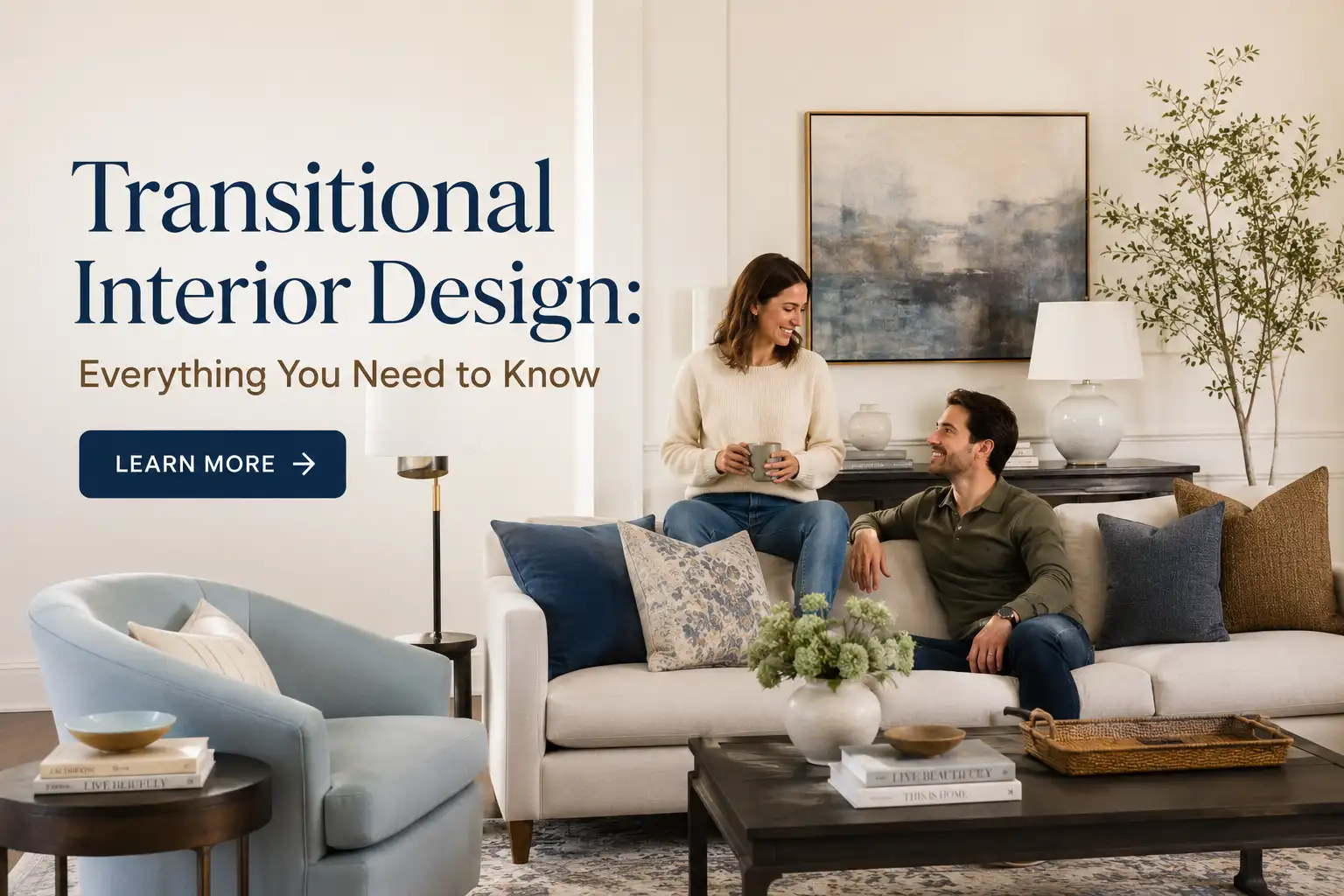
Start with a neutral sofa. Oatmeal, warm ivory, soft gray. Oak or walnut coffee table with clean lines. A woven rug to tie the seating together. One accent chair in dusty blue or warm camel. Floor-length linen panels in warm white. Simple, does not date.
Transitional Interior Design Kitchen
Shaker cabinets in white or soft gray hit a sweet spot. Current but not trendy. Quartz countertops in warm white or soft gray with subtle veining pair well.
Hardware moves a kitchen fast. Brushed brass or oil-rubbed bronze pulls at $8 to $25 each are worth every dollar. The interior designers in Park City we work with are consistent on this: hardware belongs in the planning conversation, not after cabinets are already hung.
Transitional Interior Design Bedroom
A linen or boucle headboard in a soft neutral anchors the room without taking over. Simple nightstands, no fussy detail. Solid duvet, textured euro shams, one throw at the foot. Keep colors consistent with the rest of the house.
Transitional vs Modern vs Contemporary: What Is the Actual Difference
Transitional vs modern interior design is basically a question about rules. Modern is tied to a specific era, mid-century mostly, with defined references like Eames chairs and teak sideboards. Transitional borrows clean lines from that world but is not locked into any decade.
Transitional vs contemporary interior design is a different issue. Contemporary follows whatever is trending right now. In a few years it can feel dated. Transitional does not follow trends so it does not carry that risk.
| Feature | Transitional | Modern Mid-Century | Contemporary |
|---|---|---|---|
| Feel | Timeless, balanced | 1950s-70s reference | Trend-driven |
| Colors | Warm neutrals | Earth tones, bold pops | Monochrome or dramatic |
| Furniture | Clean with soft curves | Organic, retro | Sleek, geometric |
| Materials | Wood, stone, metal, fabric | Teak, leather, wool | Concrete, glass, polished metal |
| Best for | Families, long-term homes | Design-forward buyers | Trend-forward homeowners |
Benefits of Transitional Interior Design
Resale is one nobody talks about enough. Transitional home decor photographs cleanly. Buyers walk in and do not feel like the style is not them. That speeds things up. If you have ever sat on a house longer than you wanted to, you know how much that matters.
Flexibility is the other real win. Bring in a new rug two years from now. Swap a chair. Change a light fixture. The room still holds. Most rigid styles do not give you that. It is a big part of why transitional style interior design keeps coming up in long-term planning.
Budget works at both ends. Around $3,000 gets you somewhere solid. Custom work runs closer to $15,000. Neither feels out of place.
How to create a transitional interior design that lasts also depends on the structure you are working with. The difference between architecture and interior design matters more than most people expect before they start.
Common Transitional Interior Design Mistakes Worth Knowing
Matching furniture sets are one of the biggest traps in transitional interiors. Mix pieces that share proportions and tone without being identical.
Too many metals confuse a space. What is transitional interior design taste when it comes to metals? Two finishes per room, that is it.
A rug that is too small is the most common mistake. Front legs of every seating piece need to sit on it. When they float off the edge, the room never quite feels right no matter what else you do.
Transitional Interior Design Examples and Ideas to Start With
These modern transitional interior design swaps do not need a full overhaul:
- Replace heavy curtains with floor-length linen panels in warm white
- Swap cabinet hardware for brushed brass pulls, often under $200 for a whole kitchen
- Go up a rug size so seating lands on it properly
- Paint with Revere Pewter (HC-172) by Benjamin Moore for a fast warm shift
- Change one pendant to something cleaner in brass or matte black
Many of the updates associated with transitional interior design also deliver some of the best returns on investment when preparing a home for sale. For a new build, a Park City custom home builder who understands transitional interior decorating makes those early decisions easier to get right.
Frequently Asked Questions
What makes transitional design different from traditional?
Traditional has a lot going on. Ornate details, rich jewel tones, formal layouts. It can start to feel heavy fast. Transitional strips that back. Softer colors, simpler shapes, same warmth without all the weight.
Does transitional interior design work in small homes?
It actually works better in small spaces than most styles do. The colors keep rooms from feeling closed in. The furniture is scaled to fit, not to impress. It just works.
Is this style still popular in 2025 and 2026?
Yes, and it has been for a while. It does not chase trends so it does not date itself the way other styles do. People keep coming back to it because it holds up.
What do transitional interiors typically cost?
A living room usually runs $3,000 to $15,000. A good sofa is $1,000 to $4,000. Rug is $300 to $1,500. Coffee table around $400 to $1,200. You can make it work at most budgets.
Can you mix transitional interiors with other styles?
Yes, pretty easily. Scandinavian, farmhouse, mid-century pieces all blend in fine. Just keep the neutral base and the proportions consistent and it holds together.
What are some simple transitional interior design examples to start with?
Linen sofa, walnut coffee table, woven rug, linen drapes. That combo alone gets you most of the way there without touching anything else in the room.
Conclusion
Most people do not want a home that feels like a design statement. They want something warm, livable, and built to last. That is what transitional interior design delivers. It pulls warmth from traditional, clarity from modern, and skips the parts of each that make a space hard to live in.
If you are building new or doing a full redesign, the team at Landmark Home Design works with homeowners across the Mountain West on projects like this from the ground up. Reach out and get your project going.