
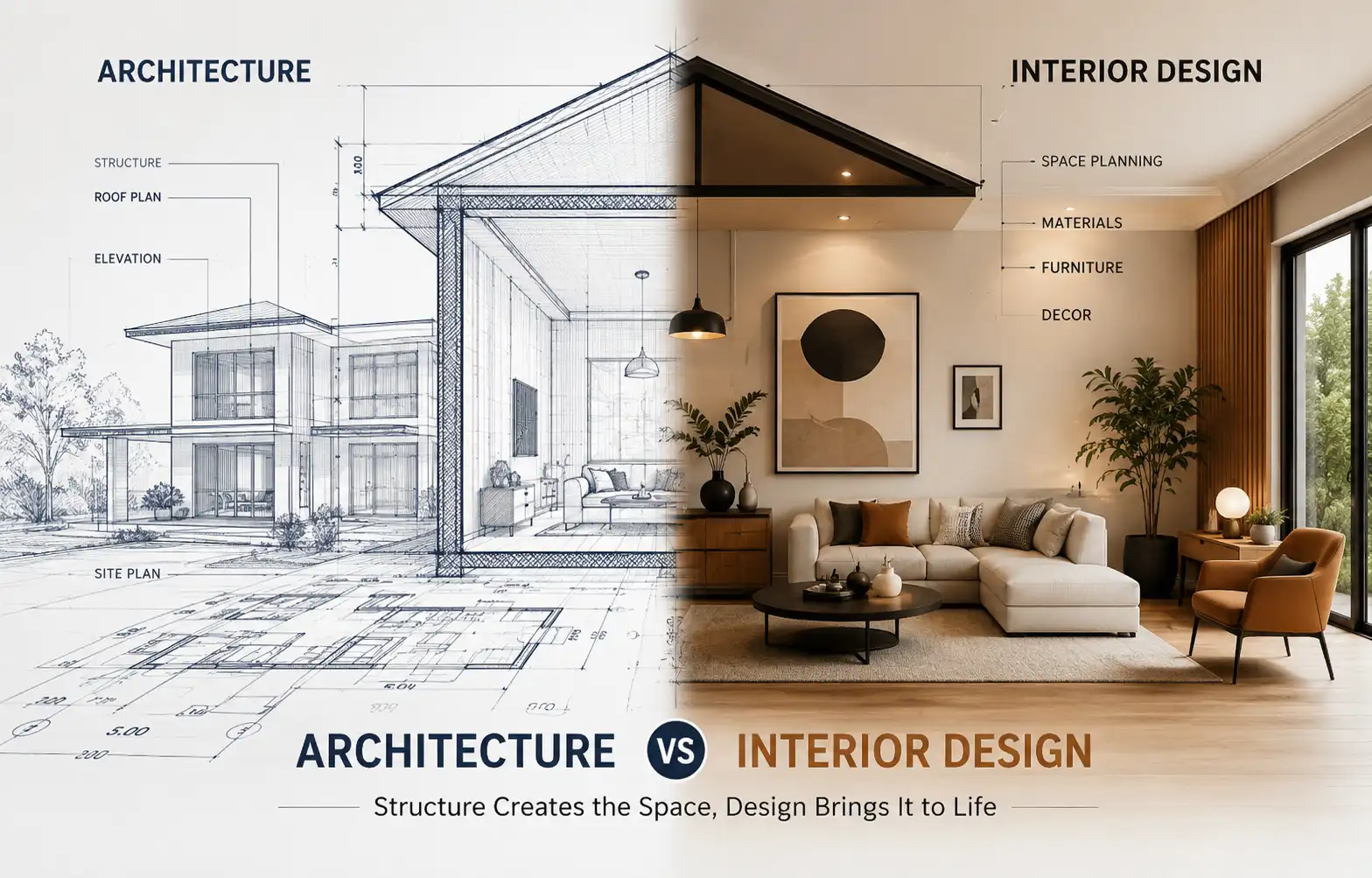
Many homeowners feel unsure before starting a renovation. They know they want a better home. But they are not always sure who to call first. Do I need an architect or an interior designer for my renovation?
This decision can shape the full project. Choosing the wrong expert can slow the project. It can also add stress or create costly mistakes. A licensed architect focuses on structure, safety, layout, and building rules. An interior designer focuses on how the rooms look, feel, and work for daily life.
Understanding an architect vs. interior designer helps you start with more clarity and fewer surprises.
What Is Architecture?
Architecture is the planning and design of buildings and structures. It covers how a building looks, how it is arranged, and how it functions in daily use.
A licensed architect prepares drawings and plans that guide construction. These plans include building layout, structure, materials, safety rules, and compliance with local building codes and permit requirements.
Architecture also involves coordination with engineers and builders to make sure the design is practical and safe to construct. Architects work on homes, offices, schools, hospitals, shops, and public buildings.
Modern architecture also considers energy efficiency, natural lighting, ventilation, and how a building fits within its surroundings.
In simple terms, architecture is about designing safe, functional, and well-planned buildings that meet both user needs and legal standards.
How Is Interior Design Different From Architecture?
The easiest way to understand architecture vs interior design is to look at what each expert solves. Architecture focuses on the building. Interior design focuses on the experience inside it.
Scope of Work
Architecture covers the full building, including structure, site planning, exterior shape, safety, permits, and building codes. A licensed architect asks, “How will this building stand, work, and meet the rules?”
Interior design focuses on space planning, finishes, lighting, furniture, comfort, storage, and daily use. An Interior designer asks, “How will people use this space and feel inside it?”
Typical Deliverables
Architects create concept plans, floor plans, elevations, permit drawings, construction documents, and technical details. They may also work with a structural engineer when Load-bearing walls or major building changes are involved.
Interior designers create room layouts, furniture plans, lighting ideas, material boards, mood boards, joinery details, and FF&E (Furniture, Fixtures & Equipment) selections.
Tools and Skills
Both may use AutoCAD, Revit, and BIM (Building Information Modeling).
Architects focus more on structure, building systems, codes, and construction. The skills of an interior designer focus more on material selection, Color theory, furniture, lighting, comfort, and how a room works in real life.
Compliance and Responsibility
Architects usually handle building safety, permits, and structural approval. Interior designers help the inside space meet practical needs, such as clear movement, safe materials, lighting, and accessibility.
So, can interior designers make structural changes? They can suggest ideas, but a licensed architect or structural engineer should review major structural work.
Where They Overlap
There is clear architecture and interior design overlap in custom homes and renovations. Both care about layout, light, comfort, materials, and function.
The main difference is simple: architecture shapes the building, while interior design shapes how people live inside it.
What Is Interior Design?
Interior design is the process of planning and improving indoor spaces so they are comfortable, functional, and visually well balanced. It focuses on how a room is used in daily life and how it feels for the people who use it.
An interior designer works on selecting and arranging elements inside a building such as furniture, lighting, colours, flooring, wall finishes, fabrics, cabinets, and decorative items. They also plan how these elements fit together so the space is practical and easy to move through.
A key part of interior design is space planning, which means deciding where furniture and features should be placed to improve flow, comfort, and usability.
Interior designers often create layout plans, mood boards, and material selections. They use design principles like colour balance, lighting design, and texture combinations to create a consistent look across the space. They may also work with FF&E (Furniture, Fixtures, and Equipment) to complete the interior setup.
Interior design can overlap with interior architecture, but the focus of interior design is mainly on the appearance, comfort, and functionality of finished indoor spaces rather than the full building structure.
Simple meaning of interior design
Interior design is the practice of shaping indoor spaces so they are practical to use, visually pleasing, and suited to the needs of the people who live or work in them.
Where interior design is used
Interior design is used in homes, offices, schools, restaurants, hotels, and other spaces where people spend time and need a well-planned environment.
Are Architect and Interior Designer the Same?
No, an architect and an interior designer are not the same. Their work can overlap, but they have different roles.
Education and Training
A licensed architect usually studies architecture through a degree such as a B.Arch degree or a master’s programme. They also complete training and exams before working independently.
An interior designer may study interior design and interior architecture, space planning, materials, lighting, furniture, and finishes. Some designers may also earn certifications such as NCIDQ, depending on their location and work type.
Registration and Responsibility
Architects usually need formal registration or a licence to use the title architect. In the United States, this may include the Architect Registration Examination (ARE) and professional standards linked with groups like the American Institute of Architects (AIA).
Interior designers may also follow professional standards, but licence rules can vary by state, country, and project type.
Project Outcome
Architects focus on safe and code-compliant buildings. Their work covers structure, permits, building codes, construction drawings, and coordination with a structural engineer when needed.
Interior designers focus on the inside experience. Their work includes space planning, material selection, color theory, lighting, furniture, comfort, and FF&E (Furniture, Fixtures & Equipment).
Why Both Roles Matter
The difference between architect and interior designer becomes clear in real projects. The architect shapes the building. The interior designer shapes how people live, work, and feel inside it.
For a strong result, both often work together with builders, engineers, and contractors. This is where architecture and interior design overlap becomes useful, especially in custom homes and major renovations.
So what’s the takeaway?
For example, homeowners working with custom home builders in Victor, Idaho, may need architectural planning for the structure and interior design support for the finished living spaces.
If you are building in Utah, working with architects in Park City, Utah, can help you plan the home’s structure, layout, and design direction from the start.
Then, custom home interior design services can help you shape the inside with materials, lighting, furniture, and finishes that fit your lifestyle.
So, if you are planning a custom home, remodel, or major renovation, start by looking at your project needs. Landmark Home Design can save your time, reduce confusion, and help you create a home that feels planned from the first line on paper to the last finishing detail.